 Call: (570) 492-9760
 Mon - Fri 8 am - 4 pm, free consultations


-
Built Local
A local business based in Northumberland, PA, serving Central Pennsylvania.
-
Free Quotes
Call or text (570) 492-9760 for a free consultation. Easy financing available.
 Built Local
 Free Quotes
Crawl Space Waterproofing in Central PA
A crawl space is the part of the house nobody goes into, which is exactly why moisture gets so far there before anyone notices. By the time the floor above feels soft or the house smells musty, the joists may have been sitting in damp air for years. Hawleys Home Restoration waterproofs crawl spaces across Central Pennsylvania from our base in Northumberland, PA. Our waterproofing work is built to remove moisture from your basement or crawl space and prevent further damage, and the crawl space gets the same attention as a full basement: drainage where water collects, a vapor barrier over the ground, dry air, and sound wood above it.
Why Crawl Spaces Get Wet in Central PA
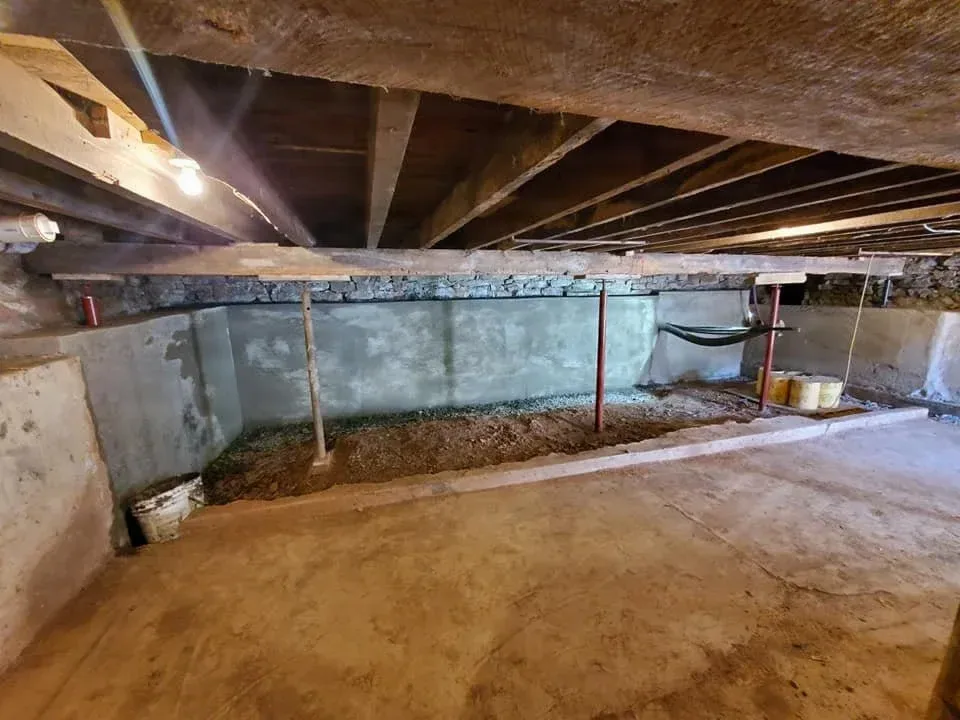
Most crawl spaces have a dirt or gravel floor, and bare ground gives off moisture all year. Add the seasons we get here: spring rain and snowmelt that fill the soil around the foundation, freeze/thaw that opens cracks in old block and mortar, and humid summer air that comes in through the vents and condenses on the cooler wood and pipes underneath the house.
Older homes make it harder. A lot of Central PA farmhouses and older houses sit on stone foundations, and stone takes on water through its joints. Some crawl spaces sit lower than the yard around them, so rain runs toward the house and pools on the crawl space floor. Water doesn't just leak. It builds up, finds the weakest point and forces its way in, whether the space below your floor is eight feet tall or three.
What Moisture Does to the Wood Above It
The crawl space holds up your floor. The sill plate sits on the foundation, the rim joist wraps the outside, and the floor joists and main beam carry everything in the rooms above. Wood that stays damp rots, and rot in those pieces shows up upstairs as floors that sag, bounce or slope, and doors that stop closing right.
The air matters too. Air from a crawl space rises into the house, so a damp, musty crawl space tends to mean a musty house. Where there is constant moisture there is usually mold, which we treat as part of the job and cover on our mold remediation page.
- Musty smell in the rooms above, worse in summer.
- Soft, sagging or bouncy floors.
- Standing water or wet ground under the house after rain.
- Dark staining, white fuzz or soft spots on the joists, sill plate or rim joist.
- Insulation hanging down or soaked between the joists.
Vapor Barriers: Keeping the Ground's Moisture Down
One of the jobs on our old site is a vapor barrier installed in a homeowner's crawl space, put in for a plain reason: to keep the floor joists from moisture rot. A vapor barrier is a heavy plastic sheet laid over the whole crawl space floor, with the seams overlapped and the edges carried up the foundation walls, so the moisture coming out of the ground stays under the sheet instead of rising into the wood.
The material makes a difference. On basement and stone foundation jobs we have installed an industrial FRM vapor barrier system and a heavy-duty 20-mil fiber-reinforced vapor barrier, which stand up to being crawled over far better than thin plastic. In a crawl space, where someone will crawl in later to reach a pipe or a duct, that toughness counts.
Drainage First Where Water Collects
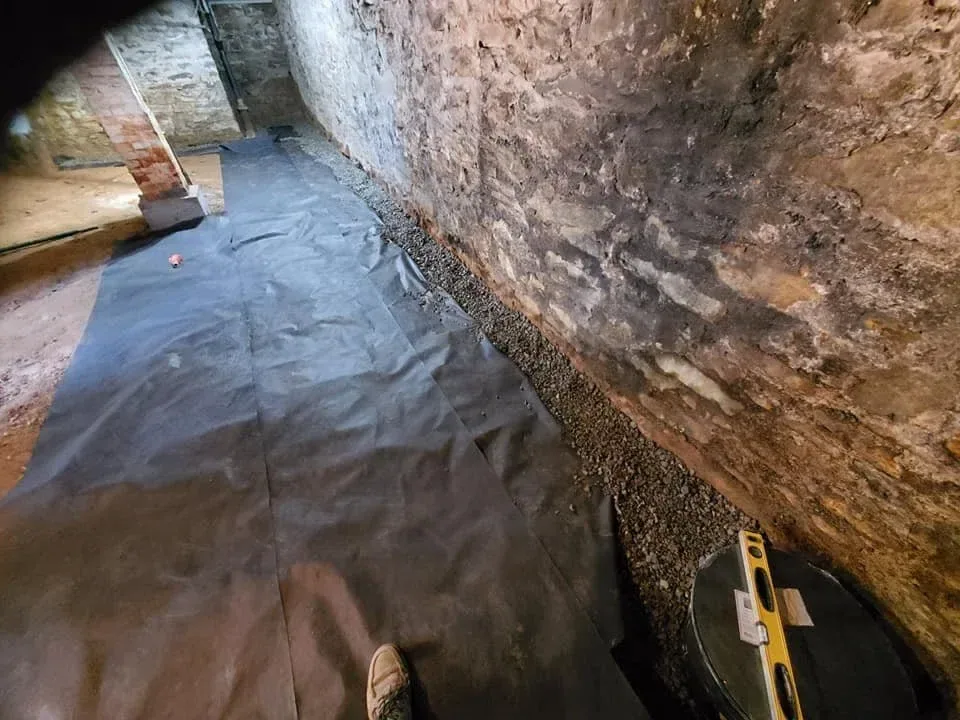
A vapor barrier handles moisture from the ground. It is not meant to hold back standing water. If water runs into the crawl space when it rains, the barrier just becomes a pool liner. So where water collects, we deal with it first, the same way we do in basements: you need to relieve the pressure, not fight the symptom.
That can mean a drain along the inside of the foundation that leads to a sump, which pumps the water out and away from the house, or our signature French drain system outside to catch the water before it gets to the walls. Where the yard slopes toward the house, an outside drain does a lot of the work. Our French drains page shows how that part works, and basement waterproofing covers the full perimeter systems we build.
Drying the Air: Dehumidifiers and Air Scrubbers
Once the water is handled and the ground is covered, the air still has to dry out. A commercial-grade dehumidifier pulls the moisture out of the space and keeps it out through the humid months. On an old farmhouse that was once a working potato farm, we set up a commercial-grade air scrubber and dehumidifier to improve air quality and control moisture in the basement. The central air unit was in the basement there, so a dry space below wasn't just important, it was essential: whatever air is down there gets moved through the house.
The same goes for a crawl space with ductwork or an air handler in it. Damp air around the ducts ends up in the rooms you live in.
Repairing Rot in the Joists, Sill Plate and Beams
Drying a crawl space stops the damage. It doesn't undo it. Wood that has already rotted has to be repaired or replaced, and that is structural work we do: moisture-rotted rim joist, floor joist, sill plate and main beam replacement. On one home with a wet basement, the constant moisture had made all the floor joists sag. We installed a full perimeter dry basement system and added 3 supplemental beams to level the floor.
At the consultation we look hard at the framing, especially the sill plate and the joist ends, where rot tends to start. If a beam or wall has moved, the fix belongs with our foundation repair work, and we plan both together so the new wood goes into a space that will stay dry.
A Crawl Space, or a Basement?
Some of the spaces people call crawl spaces in old Central PA homes are really low basements with dirt floors. If you want the room, a dig-out can turn one into usable space. We have dug basements down from 5' to 8', and from 5.5' to 8', which doubled one home's total square footage. That is a bigger job, with underpinning and knee walls to keep the foundation supported, and it is covered on our basement dig-outs page. For most crawl spaces the goal is simpler: a dry, sound space that protects the floor above.
“Anyone that lives in the area and has water issues in their basement needs to call these guys!!”
Sean, Customer testimonial
How a Crawl Space Job Starts
Call or text (570) 492-9760, or send the contact form, and tell us what you notice: the smell, soft floors, water after rain. At the free consultation we go in and look at the ground, the walls, the framing and where the water is coming from, then tell you what the space needs. If you're tired of battling water in your basement or crawl space, contact us today for a free consultation.
Is Your Crawl Space Damp or Musty?
Call (570) 492-9760 for a free consultation.
Questions We Hear a Lot

-
If the crawl space has a dirt or gravel floor, the ground is giving off moisture into the wood above it all year. A vapor barrier over the whole floor and up the walls keeps that moisture down and protects the floor joists from moisture rot.
-
No. A vapor barrier handles moisture from the ground, not standing water. If water runs in when it rains, it needs a drain and a sump, or an outside French drain, before the barrier goes down.
-
A damp crawl space is a common cause, because air from under the house rises into the rooms above. Wet ground, standing water or mold on the joists all add to it. Drying the crawl space usually starts at the water source.
-
Yes. We do moisture-rotted rim joist, floor joist, sill plate and main beam replacement, and we have added supplemental beams to level floors that sagged from constant moisture. We fix the water problem in the same job so the new wood stays dry.
-
Often, yes, especially through humid Central PA summers or where ducts or an air handler run through the crawl space. A commercial-grade dehumidifier keeps the air dry once the water and ground moisture are handled.
-
We're based in Northumberland, PA, and we serve Central Pennsylvania, including Sunbury, Selinsgrove and Lewisburg. The full list is on our service area page.
Get Your Free Consultation
Tell us what's going on with your basement, foundation or yard, where the property is and how to reach you, and we'll get back to you. Or call or text (570) 492-9760, or email contact@hawleyshomerestoration.com.
Ready to Get Started?
Call or text Hawleys Home Restoration at (570) 492-9760 for a free consultation.
-
- Service Area Northumberland, PA &
Central Pennsylvania - Working Hours Mon–Fri 8 AM–4 PMSat–Sun Closed
-


