 Call: (570) 492-9760
 Mon - Fri 8 am - 4 pm, free consultations


-
Built Local
A local business based in Northumberland, PA, serving Central Pennsylvania.
-
Free Quotes
Call or text (570) 492-9760 for a free consultation. Easy financing available.
 Built Local
 Free Quotes
Retaining Wall Contractor in Central PA
A properly built retaining wall does more than hold back earth. It transforms a property, controls water, prevents erosion and adds a sharp, finished look. Hawleys Home Restoration builds retaining walls across Central PA: new block walls, natural stone walls, double-tier walls on steep yards, and failing walls brought back to life. We build them structurally sound first, and clean, level and good-looking from every angle. No shortcuts. No sloppy finish work.
What a Retaining Wall Does
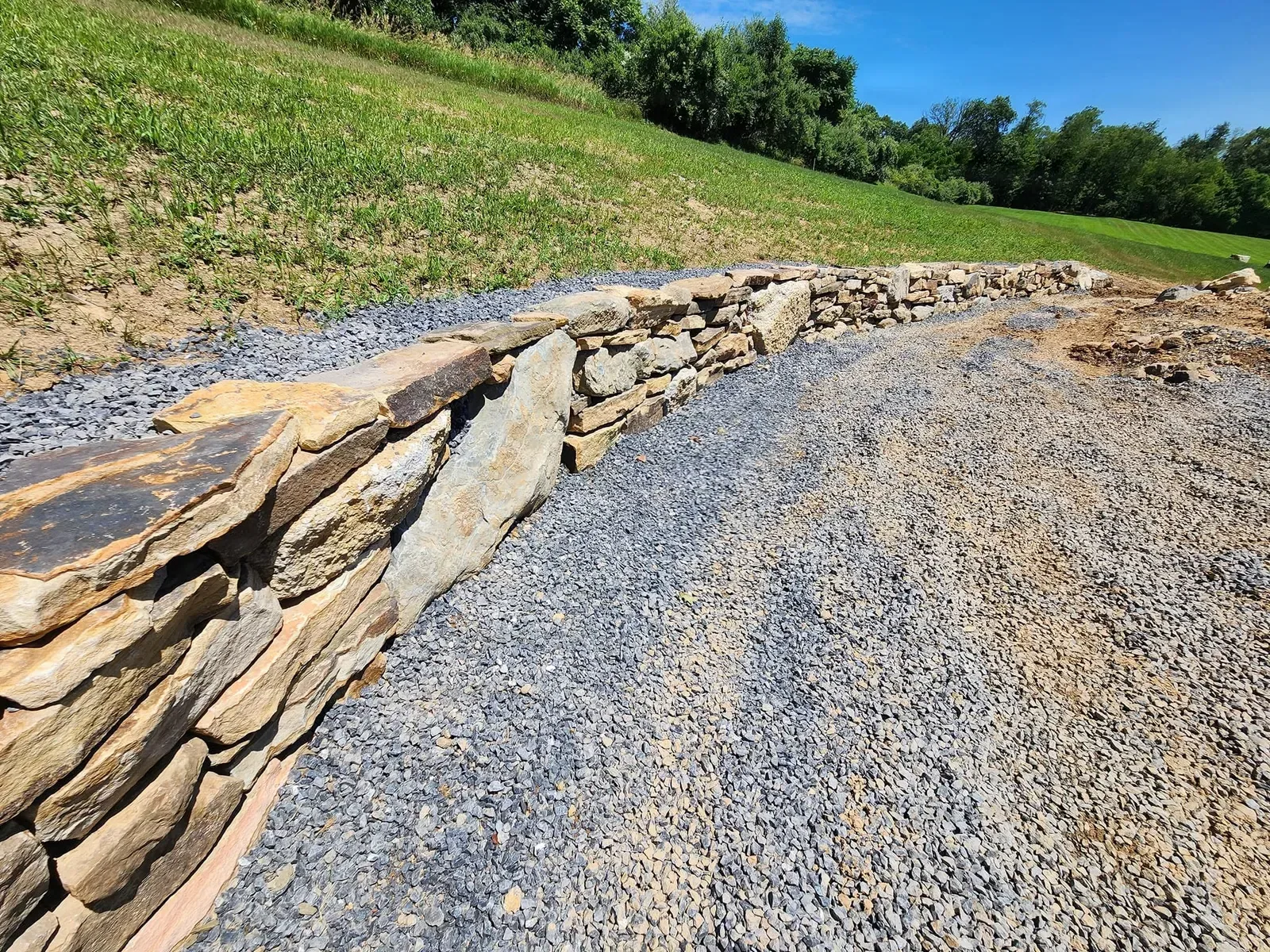
A retaining wall holds a slope in place so you can use the ground on either side of it. It turns a hillside into a flat yard, a patio or a parking spot, keeps soil off a driveway or walk, and stops a bank from slowly washing away. On a lot of Central PA properties, where homes sit on hills and old farm ground, a wall is what makes the yard usable.
- New retaining walls. Block walls for yards, driveways, patios and slopes.
- Double-tier walls. Two stepped walls instead of one tall one, on steeper grades.
- Natural stone walls. Stone walls that fit an outdoor living space or an older property.
- Failing walls rebuilt. Leaning, bulging or collapsing walls taken apart and built back the right way.
- Drainage and excavation. The digging, base, backfill and drain work that every wall depends on.
What Makes a Wall Last
The part of a retaining wall you see is the easy part. What keeps it standing is underneath and behind it.
A wall starts with excavation down to firm ground and a compacted stone base, set level, so the first course sits flat and can't settle. Each course steps back slightly into the hill, so the wall leans into the load instead of away from it. Behind the wall goes clean stone backfill and a drain pipe at the bottom, so water that soaks into the slope runs out instead of building up.
That last part matters most. Wet soil is far heavier than dry soil, and water trapped behind a wall pushes on it the same way hydrostatic pressure pushes on a basement wall. Add Pennsylvania freeze/thaw cycles, where wet ground freezes and expands every winter, and a wall with no drainage gets pushed a little further every year.
A Double-Tier Wall and a Failing Wall Brought Back
On one property we installed a new double-tier retaining wall in the backyard and brought a failing wall out front back to life. A double-tier wall breaks one tall slope into two shorter walls with a level step between them, so each wall holds back less soil. It also gives you a terrace you can plant or use.
The wall out front was failing. We don't cover up problems or put a Band-Aid on a wall that's already failing. We fix it and improve it, so when we leave, the home is better than it was when we arrived. Our name goes on every job, and years after the trucks and equipment are gone, the wall is still sitting there representing us. So we build it like our name depends on it. Because it does.
The Wall That Didn't Move an Inch
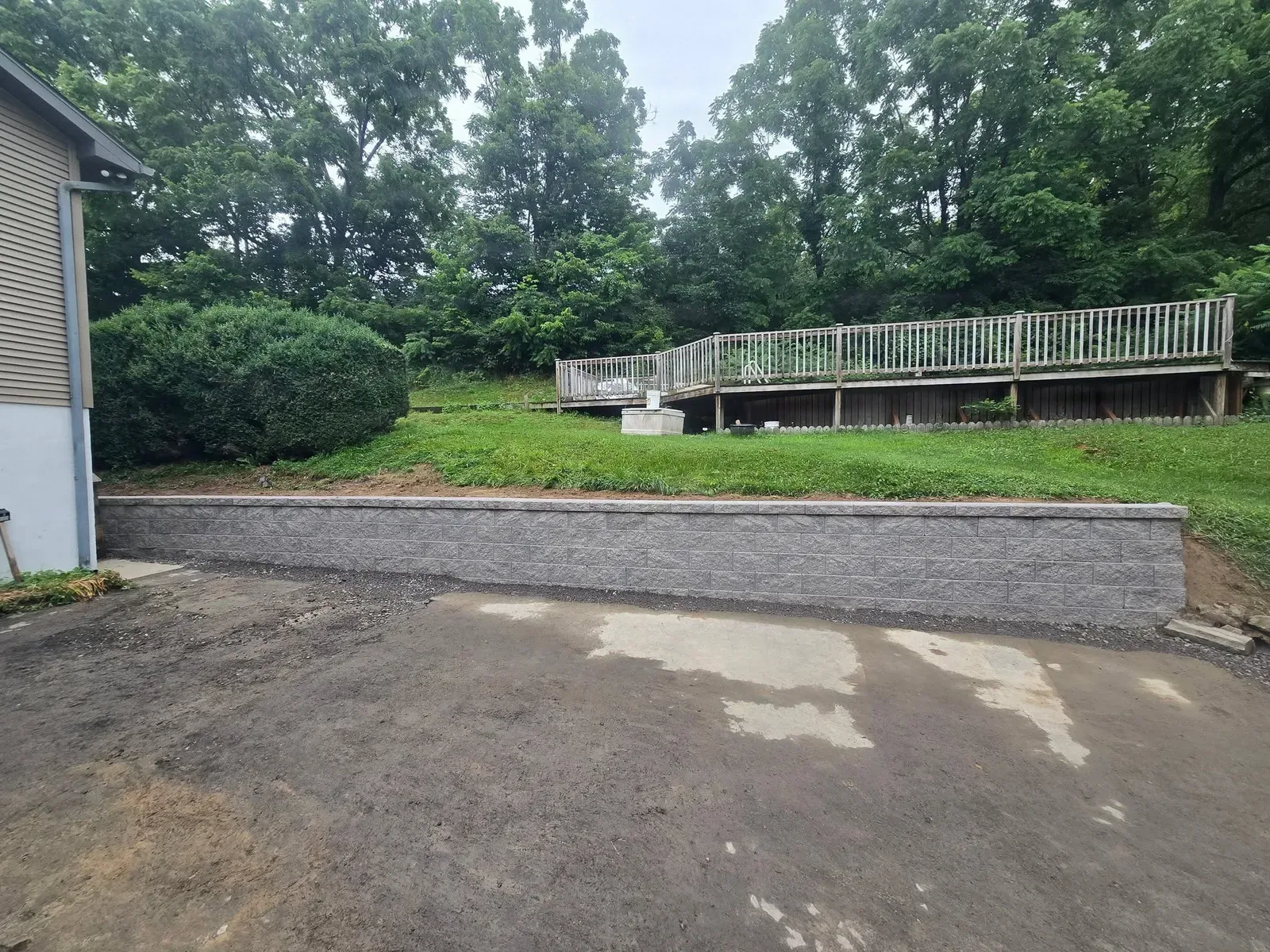
Sometimes you don't truly know how well something was built until Mother Nature puts it to the test. We recently built a block retaining wall, and after some serious water came through, the entire area behind and under parts of the wall washed out. There were sections where the wall block was literally hanging in the air with nothing underneath it.
The wall didn't move an inch. No leaning. No shifting. No collapse. The washout and the drainage issue still had to be repaired. But a wall that stays standing after losing that much support says a lot about how it was built. Anybody can build something that looks good the day they leave the job. We want to build things that prove themselves when they're put to the test.
Natural Stone Walls and Outdoor Living
Retaining walls are often one part of a bigger backyard. On one build, an old farmyard became a backyard oasis with a massive stamped concrete patio, natural stone retaining walls and a custom stone water feature built from stones out of an old barn that once stood on the property. The walls shape the ground so the patio, the seating and the water feature each have their place.
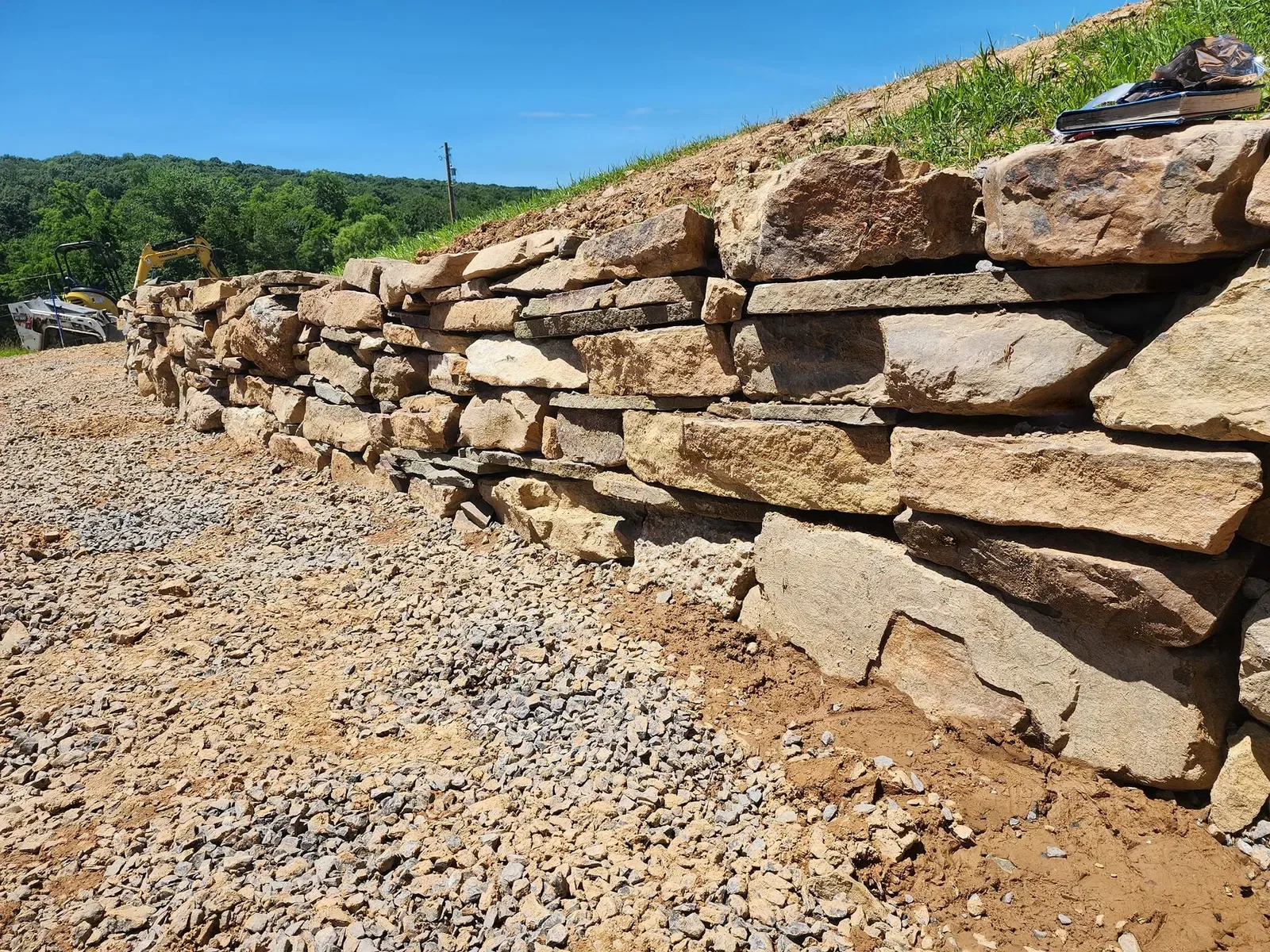
Natural stone suits older properties and farm ground, and it can be laid to look like it has always been there. Block gives a crisp, uniform face and builds fast on long runs. We build both, and we help you pick the one that fits your property and the look you want. Pair a wall with steps and a patio and the slope becomes the most used part of the yard.
Why Retaining Walls Fail
Retaining walls usually fail for a few plain reasons:
- No drainage. No drain pipe or stone backfill, so water builds up behind the wall and pushes it over.
- A weak base. Blocks set on soil or a thin base settle unevenly, and the wall starts to lean or crack.
- Frost. Wet ground that freezes behind and under a wall heaves it a little more each winter.
- Too tall for its build. A single wall asked to hold too much slope, where two tiers or more reinforcement were needed.
- Washouts. Water running over or under the wall carries away the soil it stands on.
Old masons understood soil pressure well. We investigated a stone foundation wall from 1816 that we believe was built in a half-moon curve on purpose, so it works like an arch against the soil it holds back. It is still standing. A good wall respects the load.
Drainage, Excavation and Hardscape
We handle the excavation and drainage ourselves with our Bobcat equipment, so the digging, the base, the wall and the drain are all built by one crew that knows how they fit together. When a wall needs a drain behind it or water carried away from it, we install French drains and drain pipe as part of the job. And because a basement wall is a retaining wall too, holding soil back from your house, the same thinking runs through our foundation repair work.
Planning Your Retaining Wall
It starts with a free consultation. We look at the slope, the soil, where the water runs and what you want to use the space for, then lay out the wall, its base and its drainage. Rules for walls differ from one municipality to the next, so check with yours before work begins. Easy financing is available. Call or text (570) 492-9760, Monday to Friday, 8 AM to 4 PM. Where others fail, HHR prevails.
Is Your Slope Ready for a Retaining Wall?
Call (570) 492-9760 for a free consultation.
See the Difference
Drag the handle: the same backyard before and after we built the new retaining wall and steps.


Videos and Photos From Our Jobs
Every video and photo here is from one of our own jobs. Tap a video to play it, or a photo to see it bigger.



Questions We Hear a Lot

-
Usually water. Without a drain pipe and stone backfill, water builds up behind the wall and pushes on it, and freeze/thaw makes it worse each winter. A weak or uneven base can also let a wall settle and tip. We find the cause before we rebuild.
-
Yes. We have brought a failing wall back to life on a property where we also built a new double-tier wall. We don't put a Band-Aid on a wall that is already failing: we fix it, improve it and deal with the water behind it.
-
Two shorter walls stepped up a slope with a level terrace between them, instead of one tall wall. Each wall holds back less soil, and the terrace can be planted or used. We built one in a backyard alongside rebuilding a failing wall out front.
-
Both work when the base and drainage are right. Block gives a clean, uniform face and suits long runs. Natural stone fits older properties and outdoor living spaces, like the natural stone walls we built with a stamped concrete patio.
-
It depends on where you live, because the rules differ from one municipality to the next. Check with your municipality before work begins, and tell us what they say so the wall is planned to fit.
-
We're based in Northumberland, PA, and we serve Central Pennsylvania, including Sunbury, Selinsgrove and Lewisburg. The full list is on our service area page.
Get Your Free Consultation
Tell us what's going on with your basement, foundation or yard, where the property is and how to reach you, and we'll get back to you. Or call or text (570) 492-9760, or email contact@hawleyshomerestoration.com.
Ready to Get Started?
Call or text Hawleys Home Restoration at (570) 492-9760 for a free consultation.
-
- Service Area Northumberland, PA &
Central Pennsylvania - Working Hours Mon–Fri 8 AM–4 PMSat–Sun Closed
-


