 Call: (570) 492-9760
 Mon - Fri 8 am - 4 pm, free consultations


-
Built Local
A local business based in Northumberland, PA, serving Central Pennsylvania.
-
Free Quotes
Call or text (570) 492-9760 for a free consultation. Easy financing available.
 Built Local
 Free Quotes
Basement Mold Remediation in Central PA
Mold in a basement is almost never the real problem. It is the sign of one. As our old site put it, if you have water in your basement, you are more than likely going to have a mold issue, which can be very harmful for you and your family to be breathing in on a daily basis. Hawleys Home Restoration treats basement and crawl space mold across Central Pennsylvania from Northumberland, PA, and we do it the only way that lasts: fix the water first, then clean up what it left behind, then keep the space dry.
Why Mold Follows Water in Central PA Basements
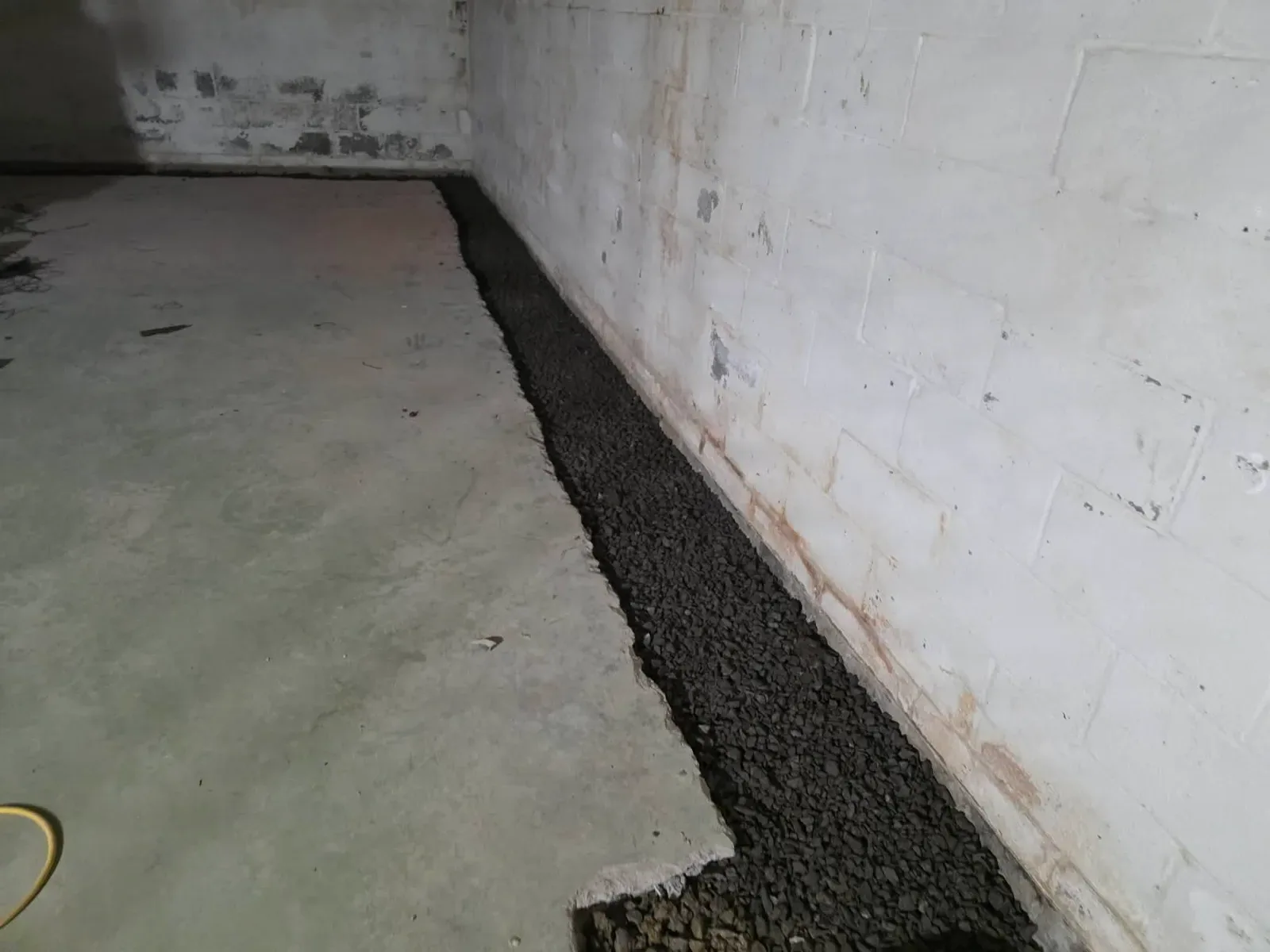
Mold needs two things: moisture and something to feed on. A basement offers plenty of both. Wood framing, the paper facing on insulation, cardboard boxes, drywall and even the dust on a concrete wall are all food. The moisture comes from water seeping through the walls after rain, snowmelt soaking the ground around the foundation in spring, damp air through the long humid summer, and old stone walls that pass water through their joints.
In a lot of Central PA homes, the basement or crawl space has been damp for decades. Old farmhouses and older houses on stone foundations are common here, and those walls were never built to keep water out. Once the space stays damp, mold grows on whatever it can reach, and the musty smell starts drifting up into the rooms above.
Signs You Have a Mold Problem Below
- A musty smell in the basement, or in the house when the air runs.
- Spots or fuzz in black, green or white on joists, walls, boxes or insulation.
- Damp walls or standing water after a heavy rain.
- Insulation that sags, stains or feels wet between the joists.
- Soft or dark wood on the sill plate, rim joist or floor joists.
If you see more than one of these, the moisture has likely been there a while, and it is worth having someone go through the whole space, not just the corner where you noticed it.
Fix the Water Source First
Spraying mold in a basement that still gets wet is a short-term fix. The mold comes back as soon as the moisture does. That is why every mold job we do starts with the question of where the water comes from, and why so much of it ends up being basement waterproofing or crawl space waterproofing.
Water doesn't just leak. It builds up behind the foundation, finds the weakest point and forces its way in, and patching or coating the wall won't stop it. You need to relieve the pressure, not fight the symptom. For most wet basements that means a full perimeter drain, weep holes where the walls are block, and a sump that moves the water out. Where the yard sends water toward the house, a French drain outside helps too.
“Billy’s crew did a great job with my basement water system!”
Tammy T., Google review
What Our Mold Work Includes
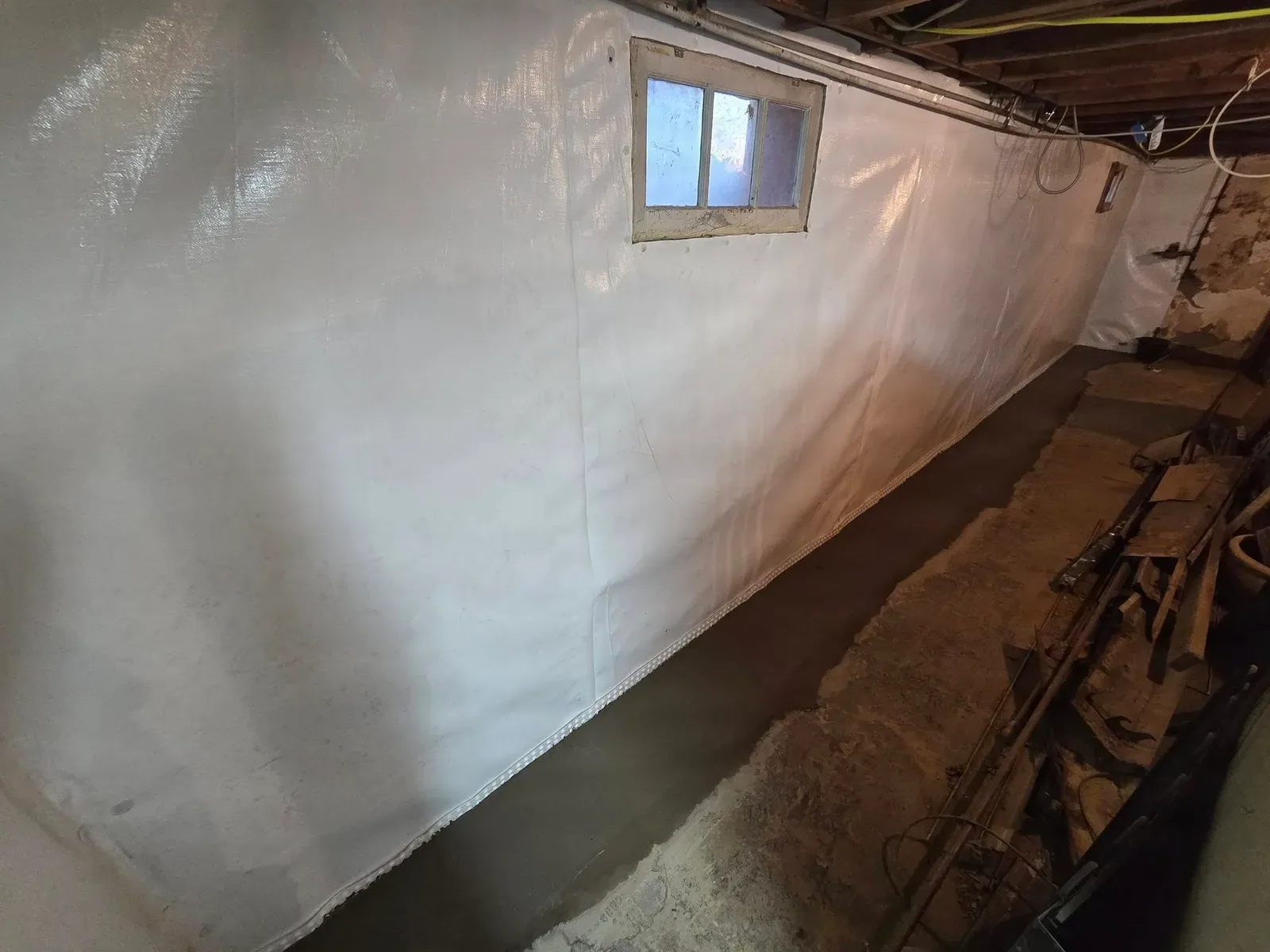
Once the water is under control, we deal with the mold and with the materials it ruined. Depending on the basement, the job can include:
- Removing damaged insulation. Wet, moldy insulation can't be cleaned, so it comes out.
- Treating and spraying for mold on the framing, walls and other surfaces.
- New insulation once the space is clean and dry.
- Repointing loose stone in old foundations, so the walls stop shedding mortar and letting water through the joints.
- An industrial FRM vapor barrier system to keep moisture from the walls and floor out of the air.
- A commercial-grade air scrubber and dehumidifier to clean the air and control moisture.
- Replacing rotted wood where moisture has gone deep into the rim joist, floor joists, sill plate or main beam.
An Old Potato Farm Made Ready for Family
Our June 2026 post is one of the jobs that shows the whole process. The house was a beautiful old farmhouse that was once a working potato farm, and the homeowner was moving an elderly parent back into it. The basement had to be clean, dry and healthy for years to come.
Our crew waterproofed the basement, removed the old, damaged insulation, treated and sprayed for mold, and installed new insulation. We repointed loose stone throughout the foundation, installed an industrial FRM vapor barrier system, and set up a commercial-grade air scrubber and dehumidifier to improve air quality and control moisture. The central air unit was in that basement, so whatever air sat down there was air the family would breathe upstairs. Creating a dry environment there wasn't just important. It was essential.
Mold in Crawl Spaces and on the Framing
Crawl spaces hide mold even better than basements, because nobody goes in. Bare dirt floors give off moisture all year, and the joists right above them stay damp. A vapor barrier over the ground, drainage where water collects and a dehumidifier are what keep the wood dry after treatment.
Where mold has been on wood for years, the wood may be soft underneath. Moisture-rotted rim joist, floor joist, sill plate and main beam replacement is part of our structural work. On one home the constant moisture had made all the floor joists sag, and we added 3 supplemental beams to level the floor along with a full perimeter dry basement system. Bigger structural fixes are on our foundation repair page.
Keeping Mold From Coming Back
A basement that stays dry stays clean. After the work is done, a few habits help it last:
- Run the dehumidifier through the humid months and empty or drain it.
- Keep downspouts and grading sending water away from the foundation, not toward it.
- Listen for the sump after a heavy rain, so you know it is moving water out.
- Store things off the floor and in plastic bins rather than cardboard.
- Call us early if the musty smell comes back, before it spreads.
How a Mold Job Starts
Call or text (570) 492-9760, or use the contact form, and tell us what you're seeing or smelling. At the free consultation we look at the mold, but mostly at the water: the walls, the floor, the framing and where the moisture gets in. Then we lay out a plan that fixes the source and cleans up the damage in one job. We don't just hide the problem. We build systems designed to manage the water and keep your basement dry.
Smell Something Musty in the Basement?
Call (570) 492-9760 for a free consultation.
Photos From Our Jobs
Every photo here is from one of our own jobs. Tap one to see it bigger.


Questions We Hear a Lot

-
Because the water is still getting in. Mold grows wherever there is moisture and something to feed on, so spraying it without fixing the leak only buys time. We find the water source and fix it first, then treat the mold.
-
Not well. Insulation that has been wet and moldy is usually removed, the space is treated and dried, and new insulation goes in once the basement or crawl space stays dry.
-
It can. Air from a basement or crawl space moves up into the house, and if the furnace or central air unit is down there, it pulls that air through the ducts. That is why we pair mold treatment with an air scrubber, a dehumidifier and a vapor barrier where they're needed.
-
If water is getting into the basement, yes. A musty smell with damp walls or standing water means the moisture source has to be fixed for the mold treatment to last. Sometimes the fix is a dehumidifier and vapor barrier, and sometimes it is a full perimeter drain and sump.
-
Mold itself is a sign of moisture, and long-term moisture rots wood. We check the sill plate, rim joist, floor joists and main beam, and replace what has rotted as part of the job.
-
Yes. Contact us today for a free consultation. Call or text (570) 492-9760, or use the contact form, and we'll look at the job with you.
Get Your Free Consultation
Tell us what's going on with your basement, foundation or yard, where the property is and how to reach you, and we'll get back to you. Or call or text (570) 492-9760, or email contact@hawleyshomerestoration.com.
Ready to Get Started?
Call or text Hawleys Home Restoration at (570) 492-9760 for a free consultation.
-
- Service Area Northumberland, PA &
Central Pennsylvania - Working Hours Mon–Fri 8 AM–4 PMSat–Sun Closed
-


