 Call: (570) 492-9760
 Mon - Fri 8 am - 4 pm, free consultations


-
Built Local
A local business based in Northumberland, PA, serving Central Pennsylvania.
-
Free Quotes
Call or text (570) 492-9760 for a free consultation. Easy financing available.
 Built Local
 Free Quotes
Log Home Restoration
A log home is a different animal from a framed house. The logs are the walls, so every gap, crack and faded patch of stain is the outside of your home and the inside at the same time. Hawley's Home Restoration has restored log homes the same way we take on a foundation: find out what is really going on, fix it properly, and leave the house better than we found it. On log homes that has meant washing, sandblasting, sealing every log, re-staining, and resetting the windows, doors and trim that let air and water in.
What Log Home Restoration Covers
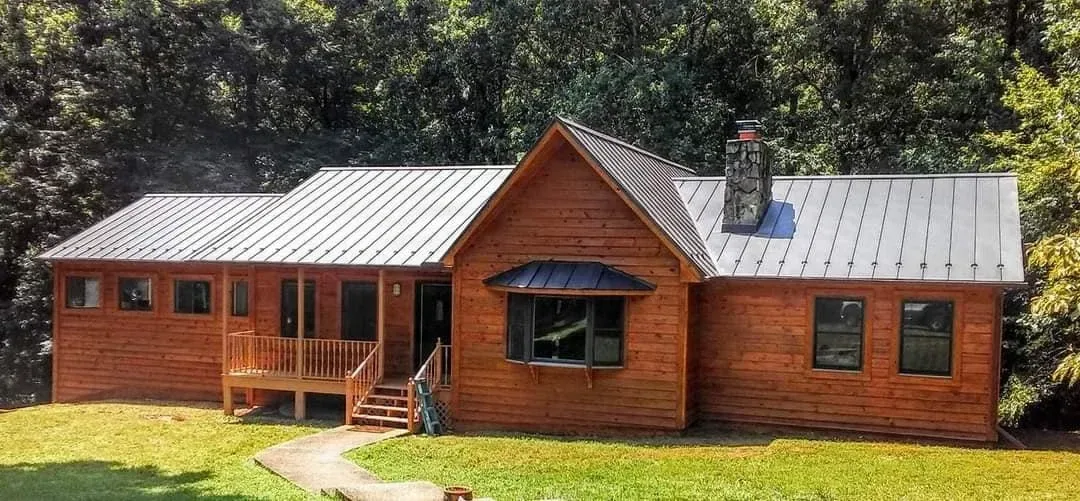
Most homeowners call about one thing they can see, usually stain that has gone gray or blotchy. On a log home that is rarely the whole story, so we look at the full wall.
- Cleaning. A full trisodium phosphate (TSP) wash to strip off dirt, mildew and old residue before anything new goes on.
- Sandblasting. Taking worn, weathered stain off and bringing the logs back down to the original wood.
- Sealing. Filling the gaps between the logs and around the openings with poly backer rod and caulking.
- Windows, doors and trim. Rehanging and sealing window frames, and sealing the doors and corner molding.
- Stain. Matching the color across the whole house and finishing with a new oil based stain.
Why Log Homes in Central PA Need Regular Care
Wood moves. Logs take on moisture in wet weather and give it up in dry weather, and over the years they shrink, twist and open up cracks called checks. Central Pennsylvania adds freeze/thaw cycles on top of that. Water that gets into a check or a gap in winter freezes, expands and pries the opening a little wider every season.
Sun does its own damage. UV light breaks down stain and the surface of the wood, which is why the sunny side of a log home often looks gray and dry while the shady side still looks fine. Once the stain is gone, rain soaks straight into bare wood, and wet wood that never fully dries is where rot starts. Sealing and staining on time is how a maintenance job stays a maintenance job instead of turning into rotted logs.
Sealing Every Log
On one log home we had to seal every single log on the house. The homeowners could already tell the difference in their insulation before we left. That makes sense: in a log wall, the gaps between the logs are where outside air comes straight through, and closing them up is what stops the drafts in winter and holds the cool air in summer.
Wide gaps get a poly backer rod first. Backer rod is a round foam cord pressed into the joint. It gives the caulking something to sit on, so the bead is the right depth and sticks to the two logs on either side instead of the bottom of the gap. That lets the caulking stretch and squeeze as the logs move with the seasons, and it keeps a big gap from swallowing tube after tube of caulk.
On another home, one that hadn't had proper care in a while, we used over 700 feet of 3/4 inch poly backer rod to fill all the gaps and a little under 15 gallons of caulking. Numbers like that are normal on a log house that has been left to the weather. Every joint has to be filled, because the one you skip is the one that lets the water in.
Sandblasting Down to the Original Wood
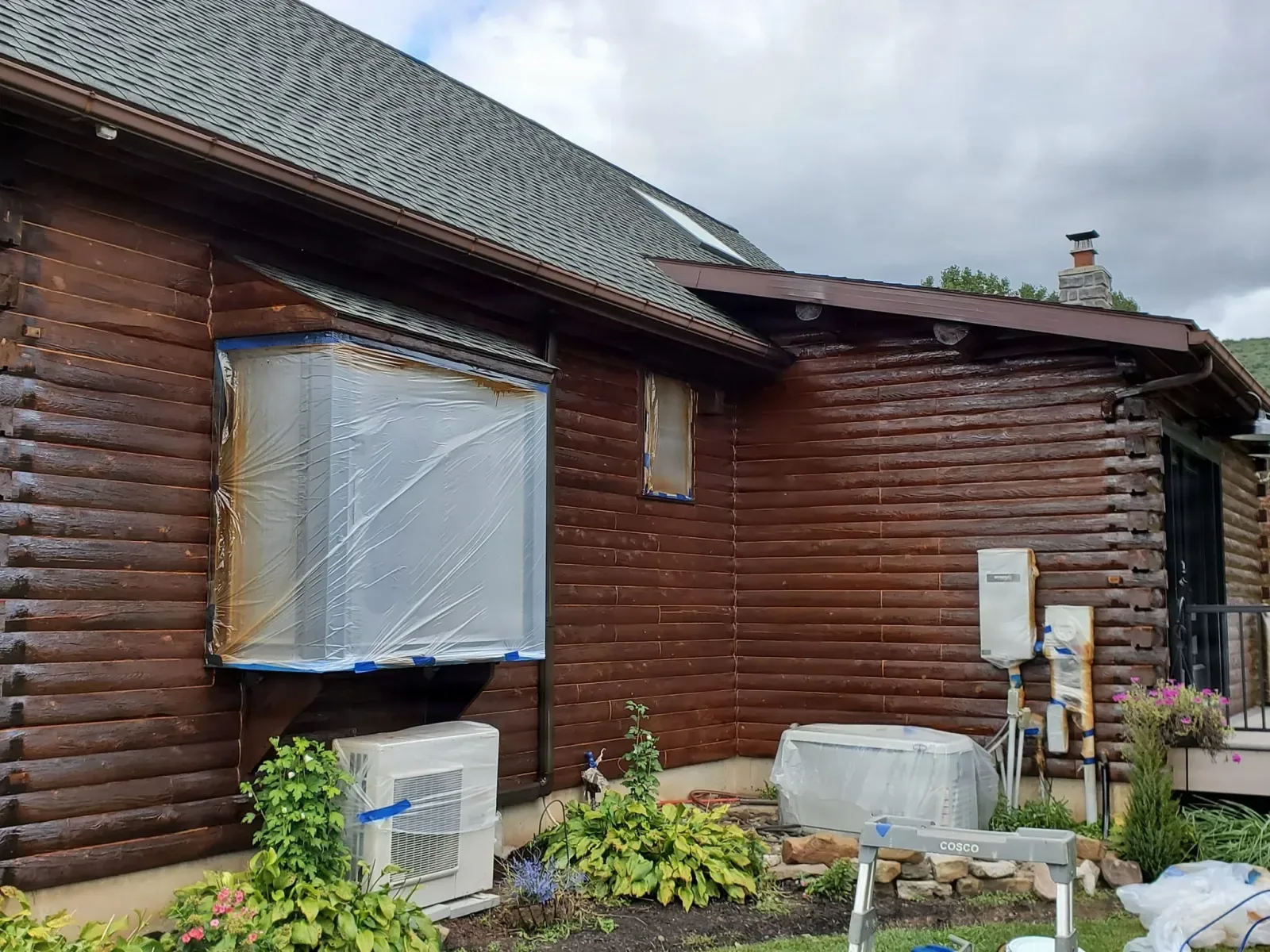
New stain over old, failing stain doesn't last. It sits on a surface that is already peeling and grayed out, and it lets go along with it. When a log home is past the point of a wash and a fresh coat, we sandblast it. Blasting takes off the old finish and the weathered gray layer of wood, and leaves clean, sound wood that new stain can soak into.
We have done more than one sandblast and re-stain on log homes. On one, we sandblasted the house down to the original wood and finished it with a new oil based stain. An oil based stain soaks into the wood instead of forming a film on top, so there is no skin to peel off later.
Matching Stain on a Faded House
Stain on a log home doesn't fade evenly. On the home with the 700 feet of backer rod, matching the stain was no easy task. The house had turned three colors, from brown to reddish to faded, depending on how much sun and weather each wall had taken. We started with a full TSP wash to get every wall clean, then worked with a stain supplier to find a product that brought the whole house back together. It really made that log home pop and stand out.
If your house has gone patchy like that, don't assume you have to pick the darkest color to hide it. Getting the surface clean and even first is what lets the new color come out the same on every wall.
Windows, Doors and Corner Molding
The openings are where a log home leaks most. Logs settle and shift over the years, and the frames set into them get pulled out of square. On that same home, most of the window frames needed to be rehung and sealed, along with all of the doors and the corner molding. A sealed log wall with a leaking window frame still lets water in behind the trim, so we treat the openings as part of the job, not an extra.
Signs to look for: daylight or a draft around a window frame, doors that stick or swing open on their own, dark stains under a window sill, and gaps opening up where the trim meets the logs.
What Sits Under the Logs
A log home is only as sound as what it rests on. The bottom logs and the sill sit closest to the ground and take the most splash and moisture, and a wet basement or crawl space keeps that wood damp from below. Much of our work happens under houses: we replace moisture rotted rim joists, floor joists, sill plates and main beams, and we build systems that keep basements and crawl spaces dry. If the bottom of your log wall is soft, see foundation repair, crawl space waterproofing and basement waterproofing. Outside, a French drain can carry yard and roof water away from the logs, and a deck or porch built right keeps water from sitting against the wall.
A Local Crew You Can Call
Built local. Built on trust. We're based in Northumberland, and the people who call us are our neighbors in Central PA.
“During this massive snow they plowed us out and didn’t ask for a cent.”
Kris S., Google review
If your log home has gone gray, drafty or patchy, call or text (570) 492-9760 and tell us about it. We'll look at the logs, the gaps, the stain and what is under the house at a free consultation, and tell you straight what it needs. So we build it like our name depends on it. Because it does.
Is Your Log Home Due for a Fresh Seal?
Call (570) 492-9760 for a free consultation.
Photos From Our Jobs
Every photo here is from one of our own jobs. Tap one to see it bigger.


Questions We Hear a Lot

-
There's no single number. Sun and weather decide it, and the walls that face the sun fade first. When water stops beading on the wood, the stain looks gray and dry, or gaps open between the logs, it's time for a look.
-
If the old stain is still sound, a full TSP wash and a fresh coat can be enough. If it is peeling, gray or three different colors, new stain won't stick to it for long. Sandblasting down to the original wood gives the new stain clean wood to soak into.
-
Backer rod is a round foam cord pressed into a gap before it is caulked. It sets the caulking at the right depth so it bonds to the logs on both sides and can stretch as they move. On one home we used over 700 feet of it.
-
Often the trouble is that the house no longer has one color. We have matched stain on a log home that had faded to three colors, from brown to reddish to faded, by washing it clean first and choosing a product that brought it all back together.
-
Usually it's the gaps between the logs and around the windows and doors. As logs shrink and settle, joints open and frames pull out of square. Sealing every log and resetting the openings closes those gaps; one family could feel the difference before we left.
-
Rot low on the wall often comes from moisture below or water splashing back from the ground. We replace moisture rotted rim joists, sill plates and floor joists and keep basements and crawl spaces dry. Call (570) 492-9760 and we'll look at what is causing it.
-
Yes. Contact us today for a free consultation. Call or text (570) 492-9760, or use the contact form, and we'll look at the job with you.
Get Your Free Consultation
Tell us what's going on with your basement, foundation or yard, where the property is and how to reach you, and we'll get back to you. Or call or text (570) 492-9760, or email contact@hawleyshomerestoration.com.
Ready to Get Started?
Call or text Hawleys Home Restoration at (570) 492-9760 for a free consultation.
-
- Service Area Northumberland, PA &
Central Pennsylvania - Working Hours Mon–Fri 8 AM–4 PMSat–Sun Closed
-


